After I shared Denver Through the Decades: The 1870s, I kept getting the same question:
Where are the 25 houses?
So I went looking.
The number originally came from research by Denver urbanist Ken Schroeppel. In 2012, his Denver’s Single-Family Homes by Decade project used Denver Assessor data to explore how the city grew and how its residential architecture evolved over time. His research identified just 25 single-family residences still standing that were recorded as having been built during the 1870s.
More than a decade later, I was curious what a current property-record search would show.
Using Realist, the property and tax-record platform I use in my real estate work, I searched Denver residential properties with reported construction dates between 1870 and 1879.
The result?
Twenty-five addresses.
Whether these are precisely the same 25 properties identified in the original research is something I have not established. But finding the same number all these years later was enough to send me down another Denver architecture rabbit hole.
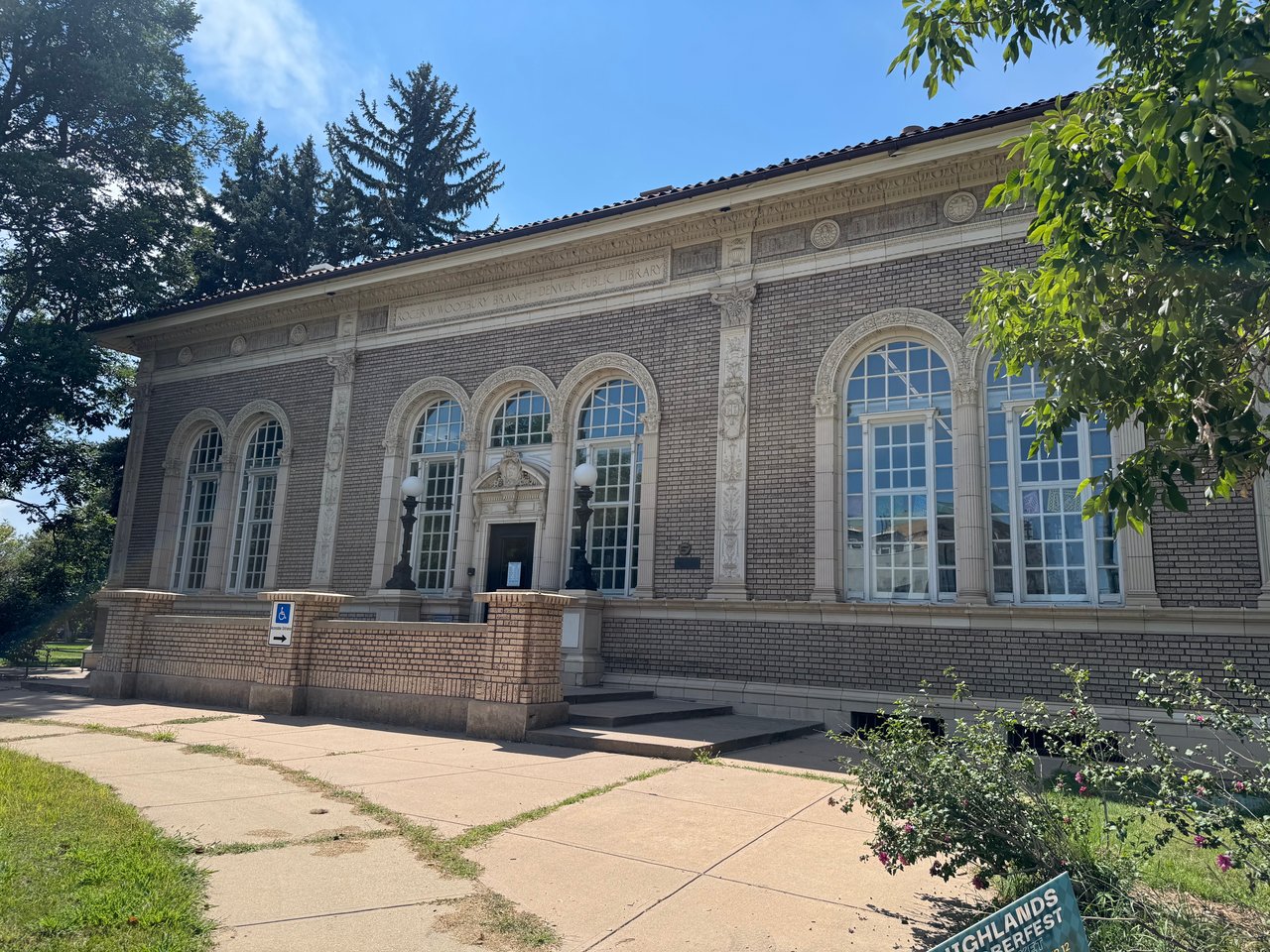
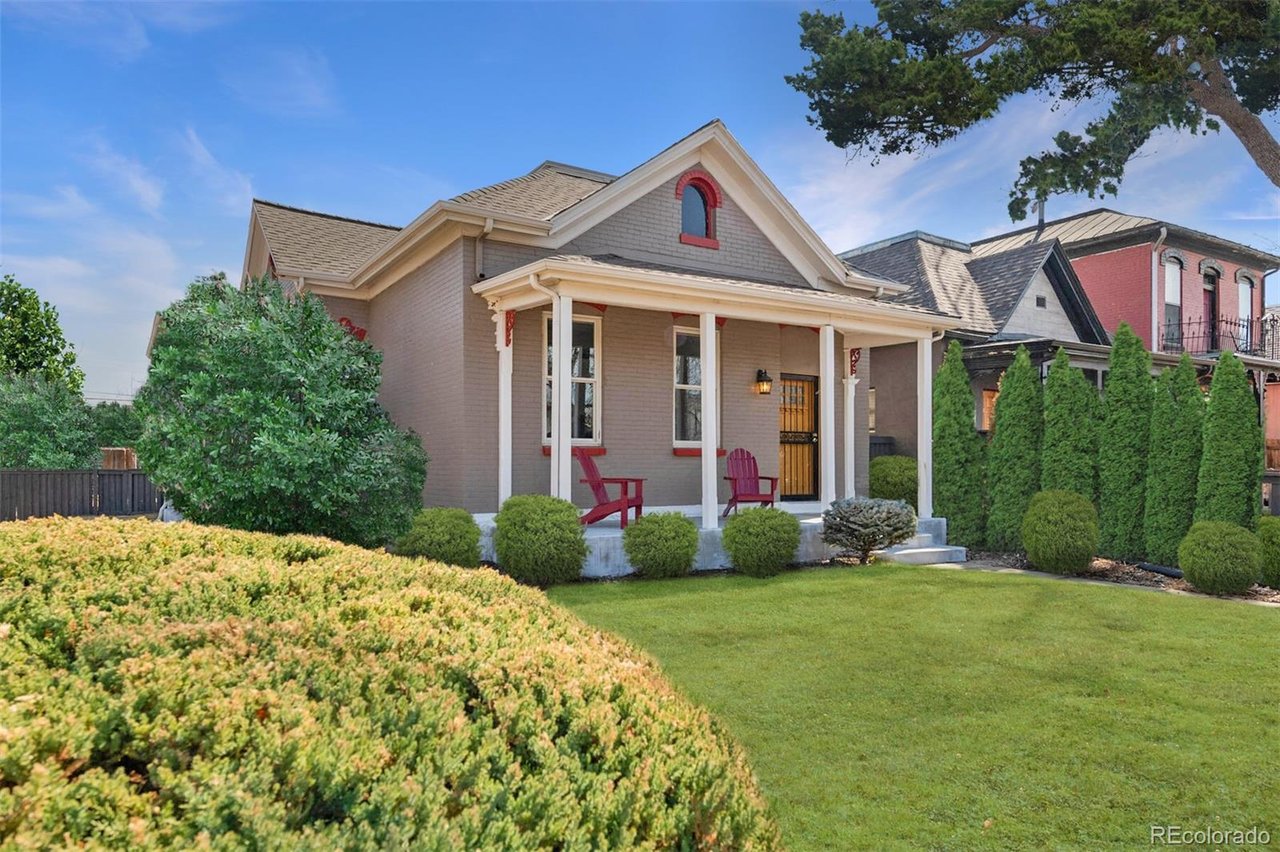
Pictured above: 1038 W 13th Avenue, one of the 25 addresses returned in my August 2026 Realist search. Property photo courtesy of LIV Sotheby’s International Realty.
First, a note about the data
Property records are incredibly useful, but when we’re talking about houses approaching 150 years old, things can get complicated.
A recorded construction date may be approximate. A house may have been enlarged, remodeled, reclad or substantially altered over generations. And properties can be missed entirely depending on how they are classified in the Assessor’s database.
Ken noted this limitation in his original research as well. His analysis relied on the Assessor’s Year Built and Property Type fields. If either was inaccurate, or if a historic house was classified as something other than single-family residential, it would not necessarily appear in his results.
So consider this an architectural scavenger hunt, not a historic register.
The 25 addresses in this article are properties returned by my August 2026 Realist search with reported construction dates between 1870 and 1879. I have not independently authenticated the construction date or architectural integrity of every house on the list.
Denver was barely Denver
It’s easy to look at one of these houses today, surrounded by mature trees, paved streets and generations of later development, and forget just how young Denver was when it was built.
Denver was founded in 1858. When the 1870s began, the city itself was barely more than a decade old. Colorado wouldn’t become a state until 1876.
The city’s built environment was young, too. Many early homes were constructed without the services of an architect, and much of Denver’s residential architecture reflected its boomtown roots. Building permits weren’t required until 1889, meaning every house on this list predates the permitting system we take for granted today.
These weren’t houses being built in an established Denver.
They were being built as Denver itself was taking shape.
What did an 1870s Denver house look like?
There wasn’t one answer.
Many of Denver’s earliest houses were practical buildings constructed by local builders rather than formally trained architects. Some were simple wood frame cottages. Others reflected architectural styles and ideas making their way across America as Denver grew wealthier and more permanent.
Ken Schroeppel’s original research, with architectural observations and photography by Mark Zakrzewski, highlighted several architectural traditions among Denver’s surviving 1870s homes.
Frame Vernacular
“Vernacular” architecture is shaped largely by local builders, available materials and everyday needs rather than strict adherence to a formal architectural style.
In early Denver, that often meant a relatively simple wood frame house with little ornamentation, reflecting the city’s boomtown roots.
Italianate
One of the great architectural fashions of nineteenth century America.
Look for tall windows, projecting bays, low or hipped roofs, broad cornices and decorative brackets. Inspired loosely by Italian architecture, the style became distinctly American as it spread across the country.
Second Empire
The easiest clue is the roof.
A mansard roof has a steep lower slope and a much shallower upper slope, creating the distinctive silhouette associated with Second Empire architecture. The style originated in nineteenth century France and became fashionable in the United States after the Civil War.
Eclectic
Not every old house fits neatly into one architectural category.
Builders mixed forms and details, and houses continued to evolve long after they were first constructed. Porches were added or removed. Windows changed. Stucco covered earlier materials. New rooms and even entire floors appeared.
The oldest houses in Denver are often architectural puzzles.
The 25 addresses
These are the 25 Denver addresses returned by my August 2026 Realist search for residential properties with reported construction dates between 1870 and 1879.
Rather than treating this as a definitive inventory of surviving 1870s architecture, think of it as a starting point for exploring some of the oldest residential property records in Denver.
1. 1143 N Logan St
2. 762 Inca St
3. 644 Fox St
4. 1353 Lipan St
5. 1038 W 13th Ave
6. 1054 Kalamath St
7. 760 Mariposa St
8. 758 Mariposa St
9. 75 Stuart St
10. 360 King St
11. 444 Inca St
12. 442 Inca St
13. 417 Cherokee St
14. 501 E Iliff Ave
15. 4868 Wyandot St
16. 4795 Gaylord St
17. 2918 N Lafayette St
18. 2861 Champa St
19. 2958 Vallejo St
20. 2534 W 38th Ave
21. 2505 W 36th Ave
22. 2533 W 32nd Ave
23. 2547 Lawrence St
24. 2437 Lawrence St
25. 2431 California St
Why only 25?
The number doesn’t mean Denver built only 25 houses during the 1870s. Far more were constructed.
The remarkable part is how few appear to remain in today’s residential property records.
Over nearly 150 years, houses have been demolished, replaced, expanded, converted to other uses or absorbed into larger developments. Others may still exist but no longer appear in a search like this because of how the property is classified or how its construction date is recorded.
Ken Schroeppel pointed to an especially interesting example in his original research: Four Mile House. Built in 1859, it is recognized as Denver’s oldest standing structure. But because the property was classified according to its later historic and recreational use rather than as a single family residence, it didn’t appear in his residential dataset.
That’s an important distinction.
These 25 addresses aren’t necessarily all that survives of 1870s Denver. They’re what this particular search allows us to see.
Where did Denver’s earliest homes survive?
The geography tells part of the story.
In his original research, Ken Schroeppel found Denver’s remaining 1870s single family homes scattered primarily through Lower Highland, Curtis Park/Five Points, La Alma/Lincoln Park and Baker.
More than a decade later, many of the addresses returned in my Realist search still cluster in and around these older parts of the city.
That makes sense. These neighborhoods sit within some of Denver’s earliest patterns of settlement and residential growth. As the city expanded outward, much of what had come before was demolished, redeveloped or altered beyond recognition.
What remains today gives us small glimpses into a Denver that existed before many of the neighborhoods and architectural styles we now associate with the city had even arrived.
Sometimes the oldest layers of Denver are still hiding in plain sight.
Go see them
One of my favorite things about learning Denver’s architectural history is that eventually you start seeing the city differently.
A strange roofline. An old transom over a door. Decorative brackets tucked beneath a cornice. Brick that looks noticeably older than everything around it. A tiny cottage sitting among buildings constructed generations later.
Once you know what to look for, these details become clues.
If you decide to go exploring the addresses on this list, please remember that most are private homes. Enjoy them from public streets and sidewalks and respect the people who call them home.
And if you find something interesting, send it to me.
An old photograph. A construction record. A story about one of the houses. Or maybe evidence that one of the dates on this list isn’t right.
I’d love to know what we can collectively uncover about these 25 pieces of early Denver.
A working list
I don’t consider this the end of the story.
I’d like to continue researching and photographing these properties to better understand what remains today. Which houses still retain their nineteenth century character? Which dates can be confirmed through historical records? Which have been substantially altered? And are there other surviving homes from the 1870s that a property search like this simply misses?
As I learn more, I’ll continue to update this page.
Denver has spent nearly 150 years growing and rebuilding around these addresses. The fact that pieces of that earliest residential fabric may still be with us is remarkable.
They’re not just old houses. They’re fragments of the city Denver used to be.
And perhaps the best part of studying them is realizing how much of Denver’s story is still sitting right in front of us.
Sources & Further Reading
This article was inspired by Ken Schroeppel’s “Denver’s Single-Family Homes by Decade: 1870s” on DenverUrbanism, with architectural observations and photography by Mark Zakrzewski.
Ken’s original post is an excellent deeper dive into the geography, architecture and methodology behind the 1870s research:
DenverUrbanism — Denver’s Single-Family Homes by Decade: 1870s
https://denverurbanism.com/2012/02/denvers-single-family-homes-by-decade-1870s.html
The 25 addresses in this article came from my own August 2026 Realist property-record search.
Property photo of 1038 W 13th Avenue courtesy of LIV Sotheby’s International Realty.
Looking for a home from a particular era?
I spend a lot of time thinking about how Denver’s housing stock changed from decade to decade — from nineteenth century cottages to Denver Squares, Tudors, midcentury homes and beyond.
If there’s a particular architectural period you love, I’d be happy to help you find it.
Contact me at dyllanre.com or use the link in my bio.